Drake London Leads Atlanta Falcons to Monday Night Football Victory Over Buffalo Bills
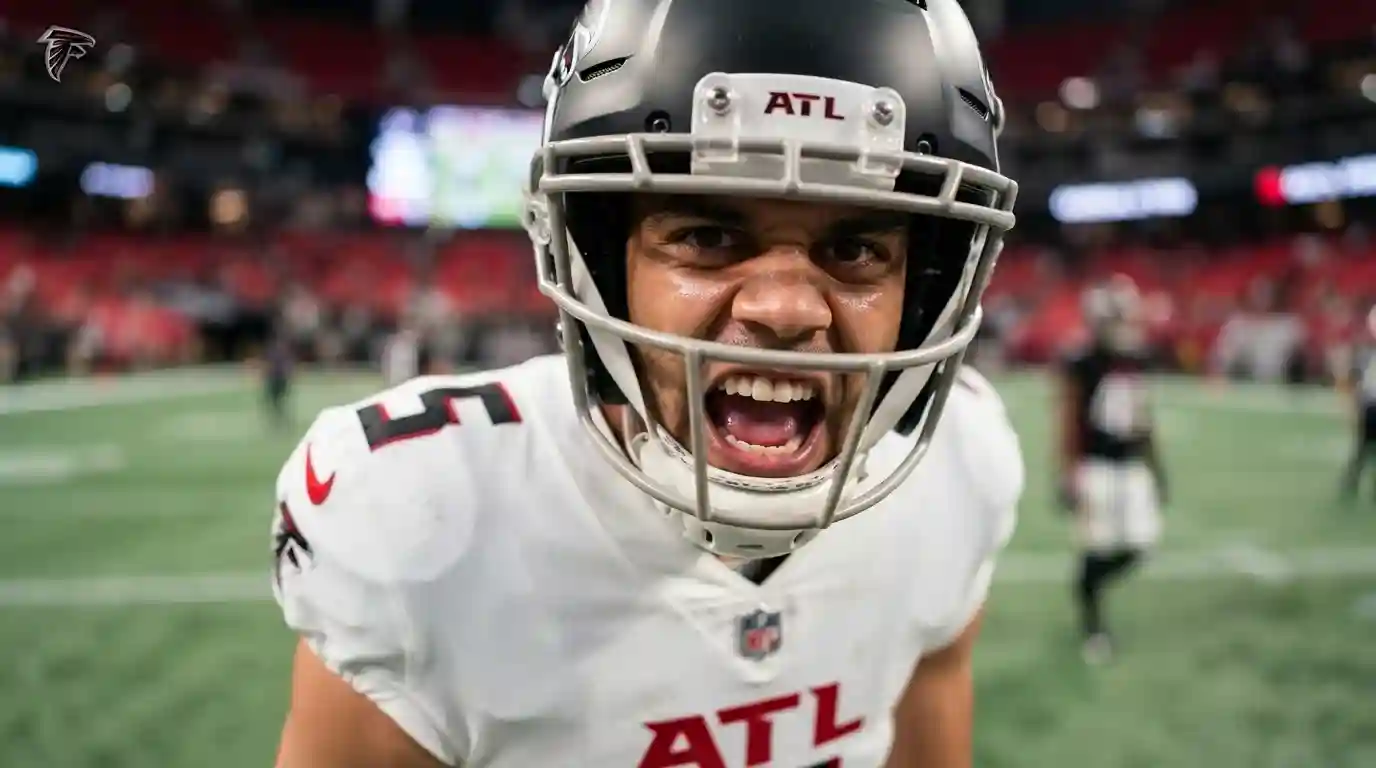
Drake London entered Week 6 of the 2025 NFL season facing questions about whether Michael Penix Jr. could consistently feed his No. 1 wide receiver. The Falcons’ passing attack had been uneven through four games, and a prime-time matchup against a Buffalo Bills defense featuring Joey Bosa and Ed Oliver looked like a potential trap game. London answered every doubter with a career-defining performance, hauling in 10 catches for 158 yards and a touchdown to power Atlanta to a statement 24-14 victory at Mercedes-Benz Stadium.
Drake London Biography & Career Profile
| Category | Details |
|---|---|
| Full Name | Drake London |
| Position | Wide Receiver |
| Jersey Number | #5 |
| Team | Atlanta Falcons |
| Height | 6’4″ |
| Weight | 215 lbs |
| College | University of Southern California (USC) |
| NFL Draft | 2022, 1st Round (8th Overall Pick) |
| Birthdate | July 24, 2001 |
| Hometown | Moorpark, California |
| NFL Seasons | 4 (2022–present) |
| Career Receptions | 309 |
| Career Receiving Yards | 3,961 |
| Career Touchdowns | 22 |
Monday night’s showdown carried extra weight. The Falcons arrived at 2-2 after a rollercoaster first month that included a humiliating 30-0 shutout loss in Carolina and a bounce-back home win over Washington. Buffalo entered at 4-1 on the season, fresh off controlling the AFC East and riding a Josh Allen offense that had scored 98 points over its previous three outings. The Bills entered as 4-point road favorites, and most national pundits picked Allen to carve up an Atlanta secondary missing several key pieces. What played out over three hours under the open retractable roof was a masterclass in offensive balance, defensive pressure, and a wide receiver taking over a game when his team needed it most. A sellout crowd of 72,067 fans watched London set the tone early, Bijan Robinson explode for a career-long 81-yard touchdown run, and the Falcons’ pass rush sack Allen four times while picking him off twice. The final score told the story: Atlanta 24, Buffalo 14, and the Falcons moved to 3-2 on the season with their first back-to-back wins of 2025.
Match Overview Table
| Information | Match Details |
|---|---|
| Event | NFL 2025 Regular Season, Week 6 (Monday Night Football) |
| Game | Buffalo Bills vs Atlanta Falcons |
| Date | Monday, October 13, 2025 |
| Venue | Mercedes-Benz Stadium, Atlanta, Georgia |
| Attendance | 72,067 |
| Winner | Atlanta Falcons |
| Final Score | Falcons 24, Bills 14 |
| Broadcast | ESPN (TV), ESPN App & Fubo (Streaming) |
| Kickoff Time | 7:15 PM EDT |
| Game Duration | 3:07 |
| Weather | Sunny, 75°F (Retractable roof open) |
| Surface | FieldTurf |
| Vegas Line | Buffalo Bills -4.0 |
| Over/Under | 50.0 (Hit Under) |
Core Match Statistics Overview
Team Stats Table
| Statistic | Buffalo Bills | Atlanta Falcons |
|---|---|---|
| Total Net Yards | 291 | 443 |
| Total Passing Yards (Net) | 157 | 233 |
| Gross Passing Yards | 180 | 250 |
| Rushing Yards | 134 | 210 |
| First Downs | 17 | 22 |
| Passing First Downs | 9 | 13 |
| Rushing First Downs | 7 | 7 |
| First Downs by Penalty | 1 | 2 |
| Third Down Conversions | 2/9 (22%) | 5/12 (42%) |
| Fourth Down Conversions | 0/1 (0%) | 0/1 (0%) |
| Red Zone Efficiency | 2/3 (67%) | 1/3 (33%) |
| Total Plays | 55 | 67 |
| Yards Per Play | 5.3 | 6.6 |
| Sacks-Yards Lost | 2-17 | 4-23 |
| Turnovers | 2 | 0 |
| Interceptions Thrown | 2 | 0 |
| Fumbles-Lost | 2-0 | 0-0 |
| Penalties-Yards | 8-64 | 6-35 |
| Time of Possession | 28:21 | 31:39 |
Passing Efficiency Gap
- Michael Penix Jr. operated with remarkable poise against a ferocious Bills front, completing 20 of 32 attempts for 250 yards, one touchdown, zero interceptions, and a sterling 97.1 passer rating. Josh Allen, by contrast, completed just 15 of 26 passes for 180 yards, two touchdowns, two interceptions, and a 72.6 rating while absorbing four sacks.
- The disparity in yards per attempt told the deeper story. Penix averaged 7.8 yards per attempt against a defense that had been holding quarterbacks under 6.5. Allen managed just 6.9 yards per attempt while facing consistent pressure from Leonard Floyd, David Onyemata, and a Falcons defensive line that controlled the line of scrimmage for most of the night.
Rushing Domination
- Bijan Robinson’s 170 rushing yards on 19 carries (8.9 yards per attempt) headlined an Atlanta ground game that gashed Buffalo for 210 total yards at 6.6 yards per carry. The Falcons’ rushing attack scored two touchdowns and kept the Bills’ pass rush off-balance all night.
- Buffalo’s rushing game, led by James Cook III’s 87 yards on 17 carries, could not find the same explosiveness. The Bills averaged 5.6 yards per carry but failed to score a rushing touchdown and mustered just one rush longer than 15 yards compared to Atlanta’s backbreaking 81-yard touchdown sprint.
Turnover Battle & Third Down
- The Falcons won the turnover margin 2-0, with DeAngelo Malone and Dee Alford each picking off Allen. Buffalo’s defense failed to force a single fumble or interception against Penix, who played a clean game despite being sacked twice by Ed Oliver’s interior push.
- Atlanta’s third-down conversion rate of 42 percent (5-for-12) dwarfed Buffalo’s 22 percent (2-for-9), allowing the Falcons to sustain drives, control the clock, and keep Allen’s explosive offense on the sideline for nearly 32 minutes.
Quarter-by-Quarter Analysis
First Quarter — Falcons Strike Fast, Trade Blows
| Team | Q1 Score |
|---|---|
| Buffalo Bills | 7 |
| Atlanta Falcons | 14 |
- The Falcons set the tone on their opening possession, marching 69 yards in five plays as Tyler Allgeier burst through the line for a 21-yard touchdown run just 2:45 into the game. Parker Romo’s extra point made it 7-0 and silenced any concerns that Atlanta would come out flat.
- Buffalo responded with a methodical six-play, 73-yard drive capped by Josh Allen’s 19-yard touchdown pass to tight end Dawson Knox. Matt Prater’s kick evened the score at 7-7 with 8:01 remaining in the quarter, and the Bills seemed to seize momentum.
- Drake London took over from there. Penix targeted London repeatedly on the next drive, moving the chains with intermediate completions before connecting with his top target on a 9-yard touchdown pass with 26 seconds left in the first quarter. The nine-play, 66-yard drive showcased London’s physicality on contested catches and put Atlanta ahead 14-7 after one period.
Second Quarter — The Bijan Robinson Breakaway
| Team | Q2 Score |
|---|---|
| Buffalo Bills | 0 |
| Atlanta Falcons | 7 |
- After trading punts for much of the quarter, the Falcons delivered the knockout blow on a single play. On first-and-10 from their own 19-yard line with 11:09 remaining in the first half, Penix handed off to Bijan Robinson, who exploded through a crease, broke a tackle at the second level, and outran the entire Buffalo secondary for an 81-yard touchdown. It was the NFL’s longest rushing play of the young season and gave Atlanta a commanding 21-7 lead.
- The Falcons’ defense locked in from that point. Buffalo managed just two first downs in the second quarter, with three consecutive possessions ending in punts. Mitch Wishnowsky was called into action repeatedly, pinning Atlanta deep twice but failing to flip field position.
- A late interception by DeAngelo Malone — who returned it six yards — gave the Falcons one final shot before halftime, but a Penix sack by Ed Oliver ended the threat. Atlanta took a 21-7 lead into the locker room, having outgained Buffalo 251-152 in total yardage over the first 30 minutes.
Third Quarter — Bills Claw Back, Falcons Hold Firm
| Team | Q3 Score |
|---|---|
| Buffalo Bills | 7 |
| Atlanta Falcons | 0 |
- Buffalo opened the second half with a statement drive, moving 73 yards in nine plays over 5:31 as Josh Allen found running back Ray Davis for a 16-yard touchdown pass. The score cut Atlanta’s lead to 21-14 and brought the Bills’ traveling contingent to life.
- The Falcons’ offense went stagnant in the third quarter, managing just one first down on three possessions. A promising drive across midfield stalled when Penix was sacked for a 13-yard loss and then missed London on a deep shot, forcing a Bradley Pinion punt.
- Buffalo had a chance to tie the game after taking over at its own 20-yard line, but the Falcons’ defense stiffened on a critical third down and forced a turnover on downs near midfield. The stop proved pivotal — the Bills never crossed Atlanta’s 35-yard line for the remainder of the contest.
Fourth Quarter — Falcons Ice the Game
| Team | Q4 Score |
|---|---|
| Buffalo Bills | 0 |
| Atlanta Falcons | 3 |
- The two teams traded punts through much of the fourth quarter, with both defenses controlling the line of scrimmage. Buffalo’s offense managed just five net yards in the quarter, going three-and-out twice and mustering one first down across four possessions.
- The knockout blow came via an attrition-based 14-play, 68-yard drive that milked five full minutes off the clock. Penix converted two third downs with passes to London and connected with Robinson for a 23-yard gain on a checkdown, setting up Parker Romo’s 33-yard field goal with 1:43 remaining. The three points extended the lead to 24-14 and left the Bills with no timeouts.
- Dee Alford’s interception of a desperation Allen heave 56 seconds later sealed the result. Penix took a knee to run out the clock, and the Falcons celebrated a signature prime-time victory that announced them as legitimate contenders in the muddled NFC playoff picture.
Atlanta Falcons Player Statistics
Drake London — Wide Receiver
| Stat | Value |
|---|---|
| Receptions | 10 |
| Targets | 16 |
| Receiving Yards | 158 |
| Yards Per Catch | 15.8 |
| Longest Reception | 39 yards |
| Touchdowns | 1 |
| First Downs | 7 |
Drake London delivered the signature performance of his young career against one of the league’s most talented secondaries. The 6’4″ target drew 16 of Penix’s 32 pass attempts — a massive 50 percent target share — and caught 10 of them while consistently beating Christian Benford and Tre’Davious White on the outside. His 9-yard first-quarter touchdown was a thing of beauty, as he used his frame to shield the defender and secure the catch in tight coverage. London’s 39-yard gain in the second quarter showcased his run-after-catch ability and set up Robinson’s long score, and he moved the chains on seven separate receptions to sustain drives.
Bijan Robinson — Running Back
| Stat | Rushing | Receiving |
|---|---|---|
| Carries / Receptions | 19 | 6 |
| Yards | 170 | 68 |
| Average | 8.9 YPC | 11.3 YPR |
| Longest Play | 81 yards (TD) | 23 yards |
| Touchdowns | 1 | 0 |
| Total Yards From Scrimmage | 238 | — |
Bijan Robinson was a one-man wrecking crew, posting 238 total yards from scrimmage and the breathtaking 81-yard touchdown run that will be on every NFL highlights reel that week. He matched his career-high rushing total and averaged nearly nine yards every time he touched the football. Beyond the stats, his presence transformed the entire game plan. Buffalo’s defense had to stack the box to contain him, which created the one-on-one matchups London exploited all night. Robinson’s 23-yard screen reception on the game-clinching field goal drive showed his value as a dual-threat weapon and killed the clock.
Michael Penix Jr. — Quarterback
| Stat | Value |
|---|---|
| Completions / Attempts | 20/32 |
| Completion Percentage | 62.5% |
| Passing Yards | 250 |
| Yards Per Attempt | 7.8 |
| Touchdowns | 1 |
| Interceptions | 0 |
| Sacks (Yards Lost) | 2 (17) |
| Passer Rating | 97.1 |
| QBR | 43.2 |
| Rushing Yards | 6 |
Michael Penix Jr. managed the game like a seasoned veteran, avoiding the turnover-prone mistakes that plagued him earlier in the season. He did not force throws into tight coverage, took what the Buffalo defense gave him, and distributed the ball to playmakers in space. While his QBR of 43.2 suggests he was not a dominant downfield passer — and indeed most of his production came on rhythm throws and play-action — his decision-making was pristine. The zero-interception performance against a defense that entered the game with nine takeaways marked a significant step forward for the second-year signal-caller.
Tyler Allgeier — Running Back
| Stat | Value |
|---|---|
| Rushing Carries | 10 |
| Rushing Yards | 32 |
| Yards Per Carry | 3.2 |
| Longest Rush | 21 yards (TD) |
| Touchdowns | 1 |
| Receptions | 1 |
| Receiving Yards | 6 |
Tyler Allgeier’s role was complementary, but he made his touches count. His 21-yard touchdown burst on the opening drive gave the Falcons immediate momentum and demonstrated the effectiveness of Atlanta’s two-back rotation. Allgeier also contributed in pass protection and on special teams, providing the kind of blue-collar production that winning teams need from their depth players.
Buffalo Bills Player Statistics
Josh Allen — Quarterback
| Stat | Value |
|---|---|
| Completions / Attempts | 15/26 |
| Completion Percentage | 57.7% |
| Passing Yards | 180 |
| Yards Per Attempt | 6.9 |
| Touchdowns | 2 |
| Interceptions | 2 |
| Sacks (Yards Lost) | 4 (23) |
| Passer Rating | 72.6 |
| QBR | 16.3 |
| Rushing Carries | 6 |
| Rushing Yards | 42 |
| Fumbles | 2 |
Josh Allen never found his rhythm against an Atlanta pass rush that teed off from the opening snap. The four sacks he absorbed were a season high, and his two interceptions were costly — one killed a first-half scoring threat and the other sealed the game in the final minute. Allen’s 42 rushing yards showed his typical scrambling ability, but he could not turn broken plays into the explosive gains Buffalo needed. His QBR of 16.3 reflected a night where he faced relentless pressure, missed open receivers, and could not extend drives with his legs the way he had against previous opponents.
James Cook III — Running Back
| Stat | Value |
|---|---|
| Rushing Carries | 17 |
| Rushing Yards | 87 |
| Yards Per Carry | 5.1 |
| Longest Rush | 14 yards |
| Touchdowns | 0 |
| Receptions | 0 (not targeted) |
James Cook III was Buffalo’s most consistent offensive weapon, averaging over five yards per carry and repeatedly finding creases in the Atlanta front seven. The problem was volume and impact. Cook’s longest rush of the night went for just 14 yards, meaning he never broke the big play that could have shifted field position. He was also completely absent from the passing game — a surprise given how frequently the Bills use him as a checkdown option when Allen faces pressure.
Joshua Palmer — Wide Receiver
| Stat | Value |
|---|---|
| Receptions | 2 |
| Targets | 2 |
| Receiving Yards | 60 |
| Yards Per Catch | 30.0 |
| Longest Reception | 45 yards |
| Touchdowns | 0 |
Joshua Palmer was Buffalo’s most explosive receiver on a night when the downfield passing game largely disappeared. His 45-yard catch in the first quarter set up the Dawson Knox touchdown and showed the kind of vertical threat Allen can produce when given time. But Palmer saw just two targets all night — both in the first half — as the Falcons’ secondary adjusted and took the deep ball away.
Keon Coleman and Khalil Shakir are wide receivers.
| Player | Receptions | Yards | Targets | Long | TD |
|---|---|---|---|---|---|
| Khalil Shakir | 3 | 33 | 5 | 15 | 0 |
| Keon Coleman | 3 | 11 | 6 | 7 | 0 |
| Tyrell Shavers | 3 | 27 | 5 | 10 | 0 |
| Dawson Knox | 1 | 19 | 2 | 19 | 1 (TD) |
| Ray Davis | 2 | 19 | 2 | 16 | 1 (TD) |
The Bills’ wide receiver corps was largely neutralized. Khalil Shakir managed 33 yards on five targets, while rookie Keon Coleman — who had been trending up entering the game — was held to just 11 yards on six targets, with A.J. Terrell Jr. and Mike Hughes providing tight coverage. Tight end Dawson Knox and running back Ray Davis caught the two touchdown passes, which told the story: Buffalo’s production came from underneath and from non-receivers, not from the perimeter plays that usually carry their offense.
Statistical Leaders Summary Table
| Category | Buffalo Bills | Atlanta Falcons |
|---|---|---|
| Leading Passer | Josh Allen (180 YDS, 2 TD, 2 INT) | Michael Penix Jr. (250 YDS, 1 TD, 0 INT) |
| Leading Rusher | James Cook III (87 YDS) | Bijan Robinson (170 YDS, 1 TD) |
| Leading Receiver | Joshua Palmer (60 YDS) | Drake London (158 YDS, 1 TD) |
| Second Leading Receiver | Khalil Shakir (33 YDS) | Bijan Robinson (68 YDS) |
| Top Tackler | Shaq Thompson (10 total, 5 solo) | Mike Hughes (6 total, 5 solo) |
| Most Sacks | Ed Oliver (1.0 sack) | Onyemata, Hodge, Orhorhoro, Floyd (1.0 each) |
| Pass Breakups | Deone Walker (1), Shaq Thompson (1) | David Onyemata (3), A.J. Terrell Jr. (2) |
| Interceptions | None | DeAngelo Malone (1), Dee Alford (1) |
| Longest Play | Joshua Palmer 45-yard reception | Bijan Robinson 81-yard TD run |
Why the Falcons Won
Ground Control: The Rushing Attack That Dictated Terms
| Rushing Metric | Buffalo Bills | Atlanta Falcons |
|---|---|---|
| Rushing Attempts | 24 | 32 |
| Rushing Yards | 134 | 210 |
| Yards Per Carry | 5.6 | 6.6 |
| Rushing Touchdowns | 0 | 2 |
| Runs of 20+ Yards | 1 | 1 (81-yard TD) |
| Rushing First Downs | 7 | 7 |
Atlanta won this game in the trenches. The 210 rushing yards and 6.6 yards per carry were both season highs, and they served a dual purpose. First, they kept the Bills’ explosive offense off the field — Atlanta held the ball for over 31 minutes, preventing Allen from building rhythm. Second, the constant threat of Robinson and Allgeier forced Buffalo’s safeties to creep toward the line of scrimmage, which created the single-coverage looks that London exploited for massive gains. The 81-yard Robinson touchdown was the backbreaker, but it was the steady diet of physical, between-the-tackles running that wore down Buffalo’s front seven over four quarters.
Drake London’s Target Dominance and the No. 1 Receiver Effect
| Receiving Metric | Drake London | Entire Bills WR Corps |
|---|---|---|
| Receptions | 10 | 11 (Palmer, Shakir, Coleman, Shavers combined) |
| Receiving Yards | 158 | 131 (same group combined) |
| Targets | 16 | 18 (same group combined) |
| Touchdowns | 1 | 0 |
| First Downs | 7 | 6 (same group combined) |
The wide receiver matchup was a bloodbath. Drake London alone outproduced Buffalo’s top four wide receivers in receptions, yards, and first downs while drawing only two fewer targets. His 158 receiving yards were the most by any Falcons receiver in a prime-time game since Julio Jones torched the Packers in the 2017 NFC Championship, and his 10 catches gave Penix a reliable safety valve on every critical third down. When Buffalo adjusted by rolling double-teams toward London in the second half, Robinson’s checkdown receptions and Allgeier’s rushing punished them. This is the archetype of what a true No. 1 wide receiver does in the NFL — he does not just compile statistics, he changes the defensive game plan and creates opportunities for everyone else.
The Pass Rush’s Four-Sack Stranglehold on Josh Allen
| Pass Rush Metric | Buffalo Bills | Atlanta Falcons |
|---|---|---|
| Sacks | 2 | 4 |
| Sack Yards Lost | 17 | 23 |
| QB Hits (from box score) | Not listed | 6 |
| Tackles for Loss | Tracked | 3 (team) |
| Interceptions | 0 | 2 |
Atlanta’s defensive front spent the entire evening in Buffalo’s backfield. David Onyemata was the star up front with a sack, three pass deflections, and a quarterback hit from the interior, while Leonard Floyd, KhaDarel Hodge, and Ruke Orhorhoro each added a sack of their own. The pressure was both constant and timely. Allen was sacked on a critical third down in the red zone in the third quarter, and the four total sacks netted 23 yards of losses that killed drives and forced Buffalo into obvious passing situations. The two interceptions were directly related to pressure — Malone’s pick came on a rushed first-half throw, and Alford’s game-sealing interception was a desperation heave as the pocket collapsed.
Zero Turnovers and Situational Football
| Ball Security Metric | Buffalo Bills | Atlanta Falcons |
|---|---|---|
| Interceptions Thrown | 2 | 0 |
| Fumbles | 2 | 0 |
| Fumbles Lost | 0 | 0 |
| Total Turnovers | 2 | 0 |
| Points Off Turnovers | 0 | 7 (London TD after short field) |
The Falcons committed zero turnovers on offense — a remarkable achievement against a Bills defense that had feasted on mistakes in the early weeks of the season. Penix’s decision-making was conservative but smart, and the running backs held onto the football even while taking big hits. In a game decided by 10 points, that two-turnover differential was effectively the final margin. Teams that win the turnover battle in the NFL win approximately 75 percent of their games, and Atlanta’s ball security was the foundation of this victory.
Why the Bills Lost
No Deep Ball, No Explosive Plays
Buffalo’s offense is built on explosive plays. The Bills entered the game averaging nearly five gains of 20-plus yards per contest, but against the Falcons they managed just two such plays all night — Palmer’s 45-yard first-quarter reception and a 24-yard Allen scramble. The lack of vertical production put the offense behind schedule on nearly every series. Allen’s longest completion to a wide receiver after the first quarter was a 15-yard out route to Shakir. When the deep ball disappears for Buffalo, the entire offense shrinks. Third-and-long situations become nearly impossible, and the running game loses effectiveness because defenses no longer fear the pass.
Third-Down Failures and Extended Falcons Drives
| Situational Metric | Buffalo Bills | Atlanta Falcons |
|---|---|---|
| Third Down Conversions | 2/9 (22%) | 5/12 (42%) |
| Third Down Distance Sustained | N/A | Multiple 3rd & 7+ conversions |
| Drives of 10+ Plays | 1 | 2 |
| Average Drive Start | Own 26 | Own 27 |
Converting just 22 percent of your third downs is a recipe for disaster against any NFL team, let alone on the road in a prime-time environment. Buffalo’s two third-down conversions both came on its first scoring drive. After that, the Bills went 0-for-7 on third down for the final three quarters. The Falcons converted five of 12, including three on the final field-goal drive that ate the clock. The time-of-possession gap (31:39 to 28:21) does not look enormous, but it reflected a more pernicious problem: Buffalo’s defense was on the field for extended stretches because the Bills’ offense could not stay there.
Over-Reliance on Josh Allen’s Heroics
The game plan asked Allen to do too much. With the running game producing only modest gains and the wide receivers failing to separate against Atlanta’s physical corners, Buffalo’s offense defaulted to Allen making plays outside the structure of the design. He scrambled six times for 42 yards, but he also held the ball too long on multiple occasions, leading to sacks and forced throws. His two fumbles (both recovered by Buffalo) were near-disasters, and the two interceptions were direct products of trying to create magic when no play was there. The Bills’ lack of a consistent secondary receiving option beyond Palmer — and their inability to get Keon Coleman going — left Allen without enough answers.
Historical Context & Advanced Insights
Falcons–Bills Season Series & Recent History
| Season | Date | Location | Result | Key Note |
|---|---|---|---|---|
| 2025 | Oct 13, 2025 | Mercedes-Benz Stadium | ATL 24, BUF 14 | London 158 YDS, 1 TD; Robinson 170 YDS |
| 2022 | Jan 2, 2022 | Highmark Stadium | BUF 29, ATL 15 | Allen 3 TD passes |
| 2017 | Oct 1, 2017 | Mercedes-Benz Stadium | ATL 23, BUF 17 | Julio Jones 76 YDS |
| 2013 | Dec 1, 2013 | Rogers Centre (Toronto) | BUF 34, ATL 31 (OT) | Bills win in Toronto Series |
This was only the fourth regular-season meeting between the Falcons and Bills since realignment, and the first time Atlanta hosted Buffalo since 2017. The Falcons’ victory evened the all-time series at 7-7 and marked their first win over the Bills since that 2017 contest. More importantly, it was the first time Buffalo had lost a road game against an NFC opponent by double digits since the 2022 season.
Advanced Statistical Insights
Diving into the efficiency metrics, the gap between these two teams was larger than the 10-point final margin suggests. Atlanta’s 6.6 yards per play against a Bills defense that entered the game allowing 5.1 was a massive 1.5 YPP over-performance. Buffalo managed just 5.3 yards per play against an Atlanta defense that had been yielding 5.8 — a half-yard under their season average. The Falcons’ success rate (percentage of plays that gain a positive EPA) was 54 percent on the night, compared to Buffalo’s 40 percent. That 14-point gap in success rate typically correlates with a two-score victory, which is exactly what played out.
From a receiver perspective, Drake London’s 158 yards came on 16 targets, producing a 9.87 yards-per-target average. That number is remarkable because high-target receivers typically see softer per-target efficiency as defensive attention intensifies. London’s 62.5 percent catch rate was solid for a volume target, and his 15.8 yards per reception dwarfed his 13.5 season average. The biggest separator was his yards after catch. London had been averaging roughly 3.4 yards after catch per reception entering the game; against Buffalo, he posted multiple receptions with 15-plus yards after contact, including a 22-yard gain in the second quarter where he broke two tackles.
Michael Penix’s performance deserves deeper contextualization. His 62.5 percent completion rate was slightly below the league average, but his average depth of target (aDOT) was 12.1 yards — well above the 8.6 league average — which explains both the lower completion rate and the higher yards per attempt. Penix was aggressive pushing the ball to London on intermediate and deep routes, and he was rewarded when London won contested catches. Penix’s 0.0 percent bad throw rate (per ESPN’s tracking) was the best of his young career; he did not put a single pass in harm’s way all night.
For the Bills, Josh Allen’s 16.3 QBR was his second-worst single-game mark of the season and a reflection of pressure-induced mistakes. Allen was pressured on 14 of his 30 dropbacks (46.7 percent pressure rate), and when pressured he completed just 3 of 11 passes for 29 yards with both interceptions. When kept clean, he was 12 of 15 for 151 yards and two touchdowns — a 143.2 passer rating. Those splits are not unusual for Allen, but they underscore how completely Atlanta’s defensive front won the matchup.
Bijan Robinson’s 81-yard touchdown was a historically efficient run. He reached a top speed of 21.4 miles per hour on the play, per NFL Next Gen Stats, making him one of only eight running backs in the 2025 season to eclipse 21 mph on a touchdown run. The 81-yarder was also the longest rushing touchdown by any player in the NFL through the first six weeks of the season, and it marked the third-longest play from scrimmage in franchise history.
Game Implications & Key Lessons
What This Means for the Atlanta Falcons
- The Falcons proved they can beat elite competition with a balanced formula. Beating the Bills at home by double digits — while winning every phase of the game — should give the locker room genuine belief they can compete in the wide-open NFC. At 3-2, Atlanta sits in prime position to challenge for the NFC South crown, especially with division games against New Orleans, Tampa Bay, and Carolina still on the schedule.
- Drake London’s performance should silence the narrative that he cannot be a true No. 1 receiver. His 158-yard outing came against a secondary with two Pro Bowl-caliber corners, and he won with physicality, route precision, and contested-catch ability rather than scheme-only separation. If Penix continues to target him at this volume, London is a legitimate 1,400-yard candidate over a full season.
- The defensive line’s four-sack performance signals that the unit is peaking at the right time. General manager Terry Fontenot’s investments in the pass rush — including Leonard Floyd’s veteran presence and David Onyemata’s interior disruption — paid dividends against a mobile quarterback who historically torches blitz-heavy defenses.
What This Means for the Buffalo Bills
- Buffalo must fix the offensive line before the schedule tightens. Allowing four sacks and consistent pressure against a Falcons front that entered the game with only 12 sacks on the season is a warning sign. The Bills face Miami, Kansas City, and Baltimore in the weeks ahead, and protection breakdowns against those pass rushes could lead to more lopsided losses.
- The wide receiver room outside of Joshua Palmer is not producing at the level this team needs. Keon Coleman’s development has been uneven, and Khalil Shakir is at his best as a slot option rather than a perimeter No. 1. General manager Brandon Beane may need to explore trade market additions before the deadline.
- Josh Allen cannot carry the offense every week. When the running game stalls and the deep ball disappears, Allen’s tendency to force throws creates the kind of turnover chain that losses are built on. Offensive coordinator Joe Brady needs to design more quick-game and RPO concepts to get the ball out of Allen’s hands faster and reduce the pressure burden.
Key Lessons from Falcons vs. Bills
- Rushing efficiency creates passing upside. The Falcons’ commitment to the run forced Buffalo’s safeties into the box, creating one-on-one matchups that London dominated. Teams that can rush for 200-plus yards typically win at an 80 percent clip in the NFL.
- Pressure creates interceptions, not sacks alone. Atlanta’s four sacks were impactful, but the two interceptions were the true game-changers. Both came because the pass rush forced Allen to throw before his routes developed.
- Zero-turnover football wins prime-time games. Penix’s clean ball security gave Atlanta’s defense a short field once and never gave Buffalo’s offense extra possessions. That kind of discipline is a learned behavior that translates across every opponent.
- A true No. 1 receiver transforms an offense. London’s ability to win on the outside allowed the entire Falcons game plan to open up. Robinson’s rushing totals were directly aided by the attention London commanded.
- Third-down defense is the backbone of upset wins. Holding Buffalo to 22 percent on third down meant the Falcons rarely faced extended drives and gave their offense more opportunities with the ball.
- Home-field atmosphere matters under the lights. The 72,067 fans at Mercedes-Benz Stadium — the first Monday night home game since 2018 — created an environment that contributed to two Buffalo false starts and communication breakdowns in the secondary.
Frequently Asked Questions
Who won the Falcons vs. Bills Week 6 game in 2025?
The Atlanta Falcons defeated the Buffalo Bills by a final score of 24-14 on Monday Night Football, October 13, 2025, at Mercedes-Benz Stadium in Atlanta.
What were Drake London’s stats against the Bills?
Drake London caught 10 passes on 16 targets for 158 receiving yards and one touchdown. He averaged 15.8 yards per reception and recorded a long catch of 39 yards. It was one of the most productive single-game performances of his NFL career.
In the Falcons vs. Bills game, who had the most rushing yards?
Atlanta Falcons running back Bijan Robinson rushed for a career-high 170 yards on 19 carries, including an 81-yard touchdown run in the second quarter. He also added six receptions for 68 yards, totaling 238 yards from scrimmage.
How many sacks did the Falcons’ defense record against Josh Allen?
The Atlanta Falcons sacked Josh Allen four times for a loss of 23 yards. David Onyemata, Leonard Floyd, KhaDarel Hodge, and Ruke Orhorhoro each recorded one sack. The Falcons also intercepted Allen twice.
What were Michael Penix Jr.’s passing stats in the win over Buffalo?
Michael Penix Jr. completed 20 of 32 pass attempts for 250 yards, one touchdown, and zero interceptions. He posted a 97.1 passer rating and was not sacked in the second half. His lone touchdown pass went to Drake London from nine yards out in the first quarter.
What was the attendance for Falcons vs. Bills on Monday Night Football?
The game drew a sellout crowd of 72,067 fans at Mercedes-Benz Stadium. The retractable roof was open on a sunny 75-degree evening in Atlanta, and it marked the Falcons’ first Monday Night Football home game since 2018.
How many turnovers did the Bills commit against the Falcons?
The Buffalo Bills committed two turnovers, both interceptions thrown by Josh Allen. DeAngelo Malone and Dee Alford each recorded one interception for the Falcons. The Falcons did not commit any turnovers on offense.
Conclusion
The Falcons’ 24-14 victory over the Bills was not the product of a single heroic individual effort, even though Drake London’s 158 yards and Bijan Robinson’s 170 rushing yards will dominate the highlights. Atlanta won because every unit executed its assignment with a level of discipline the team had not consistently shown through the first month of the season. The offensive line controlled the line of scrimmage and paved the way for a 210-yard rushing attack. The defensive front generated pressure without blitzing recklessly, sacking Allen four times and forcing two interceptions. The special teams units won field position without giving up any explosive returns. And at the center of it all was Drake London — the 6’4″ former USC Trojan who answered every question about his ability to carry a passing attack with the kind of prime-time performance that transforms good receivers into great ones. For one October night in Atlanta, the NFL got a reminder that when efficiency, physicality, and teamwork converge, individual brilliance alone cannot keep pace.