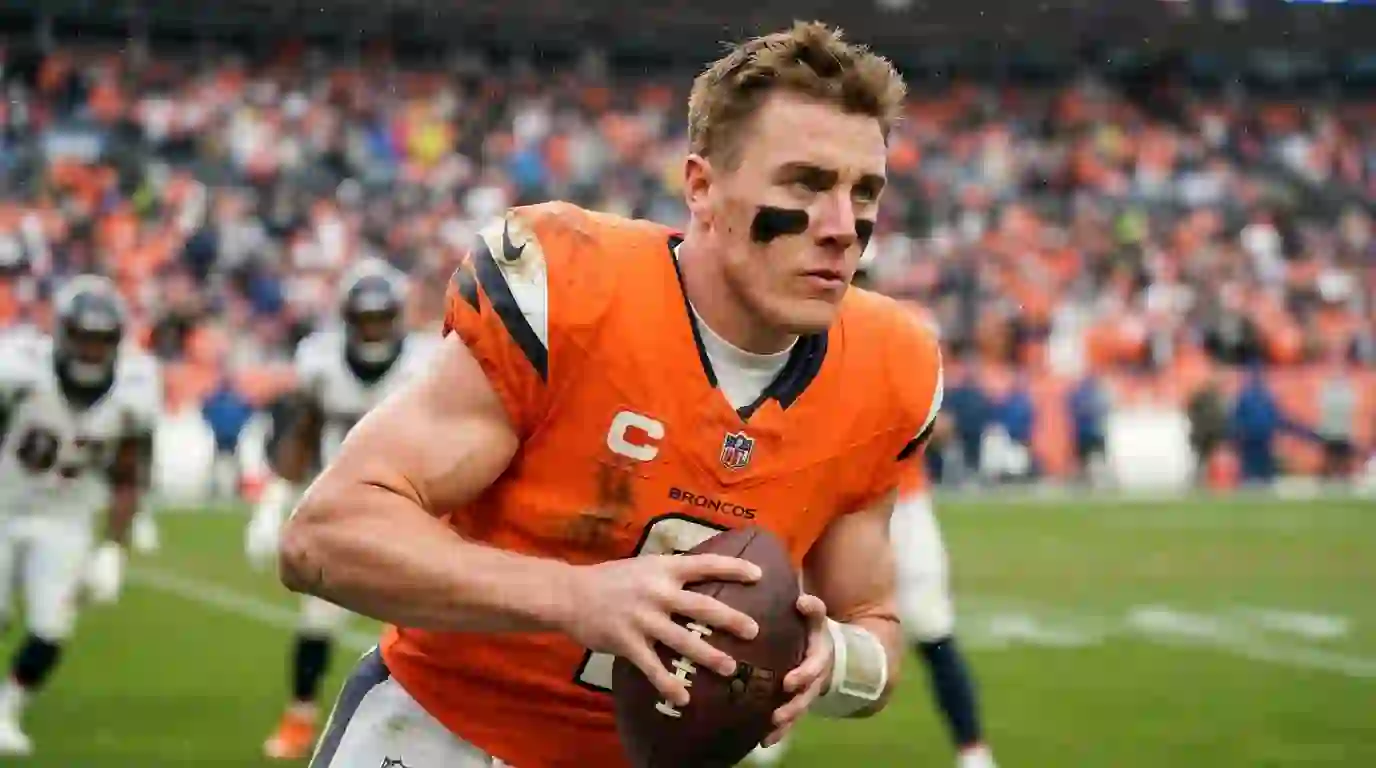
Bo Nix had never thrown four touchdown passes in an NFL game, and the Denver Broncos needed everything he had on Sunday. Denver trailed by nine in the third quarter against a Green Bay team that had not lost in a month. Bo Nix answered with the finest performance of his career, and the Broncos walked away with a 34-26 win.
The Broncos hosted the Packers on Sunday, December 14, 2025, at Empower Field at Mile High in front of 76,809 fans, extending Denver's home winning streak to a dozen games. Denver (12-2) clinched a playoff berth and claimed the best record in the NFL by erasing a 23-14 third-quarter deficit and outscoring Green Bay 20-3 over the final 25 minutes. The game was broadcast nationally on CBS, with streaming through Paramount+.
Bo Nix finished 23-of-34 for 302 yards with four touchdowns, zero interceptions, and zero sacks, posting a career-best 134.7 passer rating. He spread his touchdown passes across four different receivers while the defense produced back-to-back momentum-swinging interceptions by Patrick Surtain II and Riley Moss. Green Bay (9-4-1) saw its four-game winning streak end despite 362 total yards and a two-touchdown night from Josh Jacobs.
Bo Nix Biography and Career Snapshot
| Attribute | Details |
|---|---|
| Full Name | Bo Nix |
| Team | Denver Broncos |
| Position | Quarterback (No. 10) |
| Born | February 25, 2000 (Arkansas, USA) |
| Height / Weight | 6'2" / 217 lbs |
| College | Auburn, then Oregon |
| NFL Draft | 2024, Round 1, Pick 12 (Denver Broncos) |
| NFL Experience | Second season (2025) |
| 2025 Season Totals (entering Week 15) | 3,931 passing yards, 25 passing TDs, 11 INTs, 87.8 rating, 356 rushing yards, 5 rushing TDs |
| 2024 Rookie Year | Led all NFL rookies in total TDs (34) and passing yards (3,775); franchise rookie records for passing TDs and yards |
| Head Coach | Sean Payton |
Match Overview
| Information | Match Details |
|---|---|
| Event | NFL Regular Season, Week 15 |
| Game | Green Bay Packers vs Denver Broncos |
| Date | Sunday, December 14, 2025 |
| Venue | Empower Field at Mile High, Denver, Colorado |
| Attendance | 76,809 |
| Winner | Denver Broncos |
| Final Score | Broncos 34, Packers 26 |
| Broadcast | CBS (TV); Paramount+ and NFL+ (streaming); KOA 850 AM/94.1 FM (Denver radio) |
Core Match Statistics Overview
Both offenses moved the ball with ease in the first half before Denver's defense clamped down and Bo Nix's efficiency took over. The Broncos won the yardage battle, the passing battle, and the turnover battle, while Green Bay edged Denver on the ground.
| Team Metric | Green Bay Packers | Denver Broncos |
|---|---|---|
| First Downs | 19 | 21 |
| Total Yards | 362 | 391 |
| Passing Yards (net) | 247 | 302 |
| Rushing Yards | 115 | 89 |
| Passing (Cmp-Att-TD-INT) | 24-40-1-2 | 23-34-4-0 |
| Sacks Allowed | 3 (29 yards lost) | 0 |
| Turnovers | 2 | 1 |
| Third Down Efficiency | 6-of-13 (46%) | 4-of-11 (36%) |
| Fourth Down Efficiency | 1-of-3 | 2-of-4 |
| Time of Possession | 29:28 | 30:32 |
| Penalties | 10 for 72 yards | 6 for 60 yards |
Bo Nix Passer Rating: 134.7 vs Jordan Love's 68.3
The gap between the two quarterbacks defined the game. Bo Nix's 134.7 passer rating was the highest of his career, powered by a 67.6 percent completion rate and 8.9 yards per attempt, while Jordan Love finished at 68.3 after a 60 percent completion day with two interceptions. Denver never sacked Nix, while Green Bay's protection broke down for three sacks and constant late pressure.
- Every one of Nix's 302 yards came on clean dropbacks: zero sacks, zero scrambles under duress, and a 42-yard completion to Courtland Sutton.
- Love's final three drives produced an interception, a fourth-down sack, and a fourth-down incompletion under pressure, which is a 68.3 rating over the last possessions that decided the game.
Red Zone Efficiency: Field Goals Don't Beat Touchdowns
Green Bay moved the ball into scoring range all afternoon but took four field goals and only two touchdowns from its six scoring trips. Denver scored touchdowns on all five of its scoring drives and never attempted a field goal. The Packers' 26 points were built on quantity of drives, while Denver's 34 came from finishing drives.
- Green Bay scored touchdowns on just two of six scoring drives; Denver converted all five of its scoring drives into touchdowns.
- Denver's red-zone defense forced field-goal attempts on Green Bay's early first-half penetrations, and Riley Moss broke up a pass in the red zone to force a short kick.
Turnover Battle
Denver won the turnover margin 2-1 despite losing a fumble. Patrick Surtain II's first interception of the season flipped the game in the third quarter, and Denver converted it directly into a touchdown. Riley Moss then intercepted Jordan Love right after the Broncos went up by eight, killing Green Bay's immediate response drive.
- Surtain's interception preceded a 14-yard touchdown strike to Sutton, a 17-second swing that turned a nine-point game into a two-point game.
- Moss's interception came on the first play after Denver took the lead, canceling Green Bay's immediate answer.
Pass Protection and Pressure
The most underrated stat line in this box score is zero on Denver's sack column. Denver's line gave Nix a clean pocket on all 34 attempts while its own front sacked Love three times, hit him repeatedly, and combined with the secondary to force throws into traffic.
Period-by-Period Analysis
First Quarter: Packers 3, Broncos 0
| Period | Green Bay | Denver |
|---|---|---|
| Q1 | 3 | 0 |
Green Bay opened the game with a long, methodical drive that consumed more than seven minutes before stalling, and Brandon McManus converted a 53-yard field goal for the early edge. The Broncos' first three possessions went nowhere as Denver's offense managed almost nothing on its first three drives. Denver's red-zone defense held on the Packers' first push, and the game stayed a low-scoring chess match.
- Matt LaFleur leaned on Josh Jacobs early, and the rushing game kept Jordan Love clean on first down.
- Denver's slow start forced the offense to play from behind for the entire first half.
- The 53-yard McManus kick set the tone for a Green Bay offense that kept moving but kept settling.
Second Quarter: Packers 16, Broncos 14
| Period | Green Bay | Denver |
|---|---|---|
| Q2 | 13 | 14 |
The second quarter turned into a shootout. McManus added a 26-yard field goal for a 6-0 lead, then Bo Nix went to work. He hit Michael Bandy for a 20-yard touchdown to put Denver ahead 7-6. Jordan Love answered with a 14-yard touchdown pass to Jacobs, but Nix responded again with a 5-yard strike to Lil'Jordan Humphrey for a 14-13 Denver lead. McManus's 35-yard field goal as time expired gave Green Bay a 16-14 halftime edge.
- Nix threw two touchdown passes in the period, his first multi-score quarter of the afternoon.
- Three separate Green Bay drives reached the red zone in the first half, and the Broncos surrendered only one touchdown, which was the difference between a much larger Packers lead and a two-point half.
- The Packers won the first-half yardage total 251-173, yet led by only two, and every second-half possession would be played in that shadow.
Third Quarter: Broncos 27, Packers 23
| Period | Green Bay | Denver |
|---|---|---|
| Q3 | 7 | 13 |
The third quarter decided the game. Josh Jacobs broke a 40-yard touchdown run 1:01 into the half for a 23-14 Packers lead, the high-water mark of the afternoon. Then the Broncos flipped everything. Patrick Surtain II's interception set up Nix's 14-yard touchdown pass to Courtland Sutton, cutting the lead to 23-21. With no time left on the clock, Nix found Troy Franklin for a 23-yard score, and Denver took a 27-23 lead into the fourth quarter.
- Micah Parsons left in the second quarter with a knee injury while pursuing Nix, and his absence showed as the pressure vanished and the middle of the field opened up.
- Denver's two scoring drives in the period erased the nine-point gap that Jacobs' touchdown had created.
- Green Bay produced just over 100 yards of offense across the final two quarters combined, a 251-yard first half followed by a same-game collapse.
Fourth Quarter: Broncos 34, Packers 26
| Period | Green Bay | Denver |
|---|---|---|
| Q4 | 3 | 7 |
Denver's defense slammed the door. McManus kicked a 37-yard field goal with 10:55 left to make it 27-26, but Bo Nix converted a 4th-and-3 with a sideline dart to Sutton, and RJ Harvey punched it in from 4 yards out for the 34-26 lead. Riley Moss intercepted Love on the next series, and Green Bay's final two possessions ended in a fourth-down sack and a fourth-down incompletion.
- The 4th-and-3 conversion to Sutton was the game's single biggest play: it extended a drive that produced the winning touchdown.
- Denver's pass rush closed the game with back-to-back pressure plays on fourth down, sacking Love once and forcing the final incompletion.
- The Broncos took the air out of the ball on their final possession, eating the clock with Harvey's downhill runs and shutting down any comeback window.
Denver Broncos Player Statistics
Bo Nix, Quarterback
| Stat | Line |
|---|---|
| Passing | 23-of-34, 302 yards, 4 TD, 0 INT |
| Passer Rating | 134.7 (career high) |
| Yards per Attempt | 8.9 |
| Rushing | 7 carries, 10 yards |
| Sacks | 0 |
Bo Nix was surgical from the second quarter on, completing 20-of-27 passes after halftime and attacking every level of the field. His four touchdown passes all came to different receivers, and he played turnover-free football against a defense that had generated pressure on every quarterback it faced over the previous month. It was, by rating, yards, and situation, the best game of his two-year career.
Courtland Sutton, Wide Receiver
| Stat | Line |
|---|---|
| Receptions | 7 of 10 targets |
| Receiving Yards | 113 |
| Touchdowns | 1 (14 yards) |
| Long Reception | 42 yards |
Courtland Sutton was Denver's chain-mover and its closer. His 42-yard catch set up Denver's first touchdown, he caught the 14-yard score that flipped the game after Surtain's interception, and his 4th-and-3 sideline grab sealed the win. He beat man coverage all afternoon and finished with more than 100 yards for the fourth time in five weeks.
Troy Franklin, Wide Receiver
| Stat | Line |
|---|---|
| Receptions | 6 of 6 targets |
| Receiving Yards | 85 |
| Touchdowns | 1 (23 yards) |
| Rushing | 1 carry, 3 yards |
Troy Franklin was perfect when targeted, catching every ball thrown his way including the 23-yard touchdown as the third-quarter clock expired. His clean route running on third downs stretched the Green Bay secondary and opened the middle of the field for Sutton underneath.
RJ Harvey, Running Back
| Stat | Line |
|---|---|
| Rushing | 19 carries, 65 yards |
| Touchdowns | 1 (4 yards) |
| Long Run | 8 yards |
| Fumbles | 1 (lost) |
RJ Harvey's second-half workload wore down the Packers, and his 4-yard plunge with 7:27 left provided the final margin, his 10th touchdown of the season. He also ate the clock on Denver's last drive, keeping the ball away from Love for more than four minutes.
Green Bay Packers Player Statistics
Jordan Love, Quarterback
| Stat | Line |
|---|---|
| Passing | 24-of-40, 276 yards, 1 TD, 2 INT |
| Passer Rating | 68.3 |
| Yards per Attempt | 6.9 |
| Rushing | 3 carries, 29 yards |
| Sacks | 3 (29 yards lost) |
Jordan Love threw for 276 yards but could not convert field position into touchdowns, and his accuracy evaporated late: two interceptions and a 1-of-4 stretch on final drives ended every comeback. He was sacked three times and finished with his lowest passer rating in the second half of the season.
Josh Jacobs, Running Back
| Stat | Line |
|---|---|
| Rushing | 12 carries, 73 yards, 1 TD |
| Receiving | 2 catches, 19 yards, 1 TD |
| Total Yards | 92 |
| Long Run | 40 yards |
Josh Jacobs was the best player on the field for stretches, scoring twice inside the game's first 34 minutes and ripping off a 40-yard touchdown that spotted Green Bay its nine-point lead. He finished with 12 carries for 73 yards, but 40 of those yards came on a single play, meaning he averaged roughly three yards on his other 11 carries, and the Packers' run game disappeared from the game plan once Denver took control.
Matthew Golden, Jayden Reed, and Luke Musgrave
| Player | Receptions | Yards | Targets |
|---|---|---|---|
| Matthew Golden | 3 | 55 | 4 |
| Jayden Reed | 5 | 55 | 6 |
| Luke Musgrave | 4 | 52 | 6 |
| Romeo Doubs | 2 | 36 | 3 |
| Christian Watson | 3 | 29 | 5 |
The receiving corps produced yards in bunches but no explosive plays when they mattered. Green Bay's longest completion of the second half was 27 yards, and no receiver found the end zone. The targets were spread across nine players, yet the group could not cash a single red-zone touchdown after the first half.
Quay Walker and Xavier McKinney
Quay Walker led the Packers with nine tackles plus a tackle for loss, and Xavier McKinney added eight tackles and three pass breakups. Micah Parsons recorded a forced fumble before exiting with a knee injury, but the unit's second-half disappearance as a pass-rushing group coincided exactly with Bo Nix's 20-of-27 finish.
Statistical Leaders Summary Table
| Category | Denver Broncos | Green Bay Packers |
|---|---|---|
| Leading Scorer (Points) | Wil Lutz (4 extra points) | Brandon McManus (14: 4 FG, 2 XP) |
| Passing Leader | Bo Nix (302 yards, 4 TD, 134.7 rating) | Jordan Love (276 yards, 1 TD, 68.3 rating) |
| Rushing Leader | RJ Harvey (65 yards, 1 TD) | Josh Jacobs (73 yards, 1 TD) |
| Receiving Leader | Courtland Sutton (113 yards, 1 TD) | Matthew Golden (55 yards) |
| Takeaway Leader | Patrick Surtain II and Riley Moss (1 INT each) | Micah Parsons (1 forced fumble) |
Why the Broncos Won
Bo Nix Touchdown Passes Spread Across Four Receivers
Denver gave Green Bay no single threat to erase. Michael Bandy, Lil'Jordan Humphrey, Courtland Sutton, and Troy Franklin each caught a Bo Nix touchdown pass, and seven different Broncos caught passes in the game. The Packers' game plan targeted Sutton, so Nix punished the bracket coverage with the complementary pieces, and the 4-touchdown spread made Denver's offense impossible to double-team.
| Bo Nix Touchdown Passes | Receiver | Distance | Quarter |
|---|---|---|---|
| TD 1 | Michael Bandy | 20 yards | 2nd |
| TD 2 | Lil'Jordan Humphrey | 5 yards | 2nd |
| TD 3 | Courtland Sutton | 14 yards | 3rd |
| TD 4 | Troy Franklin | 23 yards | 3rd |
Zero Sacks and a Clean Pocket
Denver's offensive line kept its quarterback untouched. Bo Nix threw 34 passes without a single sack or hit that registered yards lost, while Green Bay's pass rush produced zero sacks from the moment Parsons left the game. The Broncos averaged 8.9 yards per attempt, and Nix had time to work through progressions against a blitz-heavy defense.
| Pass Protection | Denver | Green Bay |
|---|---|---|
| Sacks Allowed | 0 | 3 |
| Yards Lost on Sacks | 0 | 29 |
| QB Passer Rating | 134.7 | 68.3 |
Red-Zone Defense and Takeaways on Consecutive Drives
Denver's defense bent without breaking. Green Bay needed six scoring trips to reach 26 points, and McManus kicked four field goals because the Broncos' secondary held in the red zone. The Surtain and Moss interceptions arrived in back-to-back Denver possessions of momentum, flipping a 23-14 deficit into a lead in under nine minutes.
Second-Half Scoreboard Domination
The Broncos outscored Green Bay 20-3 after the Packers' 40-yard touchdown run, and they held Green Bay to just over 100 yards of offense over the final two quarters after surrendering 251 before halftime. Denver's front seven won the second half, sacking Love twice down the stretch and forcing three straight give-up drives to close the game.
Why the Packers Lost
Red Zone Failures: Four Field Goals, Two Touchdowns
Green Bay moved the ball between the 20s as well as any Denver opponent this season, but the scoring drive breakdown was lopsided. Six scoring drives produced six points per trip for Denver and 4.3 for Green Bay, and the Packers' red-zone touchdown rate was a fraction of Denver's. In a one-score game, McManus's four field goals were the margin of defeat.
| Scoring Drive Efficiency | Green Bay | Denver |
|---|---|---|
| Scoring Drives | 6 | 5 |
| Touchdowns | 2 | 5 |
| Field Goals | 4 | 0 |
| Points per Scoring Drive | 4.33 | 6.8 |
Heavy Dependence on Josh Jacobs and a Vanishing Run Game
Green Bay's identity was its run game, and it abandoned it exactly when the game tilted. The Packers finished with just 20 rushing attempts against 40 passes, and Jacobs handled 12 of those carries, meaning the entire offense hinged on one back who was held to 33 yards on his 11 carries outside his 40-yard touchdown run. Denver stacked the box after halftime and dared Love to beat the pass rush from the pocket, and the passing game could not cash those attempts into points.
Injuries and Costly Penalties
The Packers lost right tackle Zach Tom in the first half, Micah Parsons to a knee injury in the second, and safety Evan Williams late, which stripped the pass rush and the tackle depth simultaneously. They also committed 10 penalties for 72 yards, including a defensive offside on third down inside the red zone that extended Denver's go-ahead drive.
Historical Context and Advanced Insights
Season Series Breakdown: Packers vs Broncos
These two franchises meet rarely, so the December 14 result carries extra historical weight in a rivalry tied 7-7-1 in the regular season. The series history shows why the Packers had reason to worry in Denver: Green Bay is 1-7 all-time at Mile High, and this was only the second December visit in franchise history.
| Date | Matchup | Result | Notes |
|---|---|---|---|
| Dec 14, 2025 | Packers 26, Broncos 34 | Broncos win | Denver's 11th straight victory |
| Oct 22, 2023 | Packers 17, Broncos 19 | Broncos win | Same venue, decided by two points |
| Sep 22, 2019 | Packers 27, Broncos 16 | Packers win | Last Green Bay win in series |
| Nov 1, 2015 | Broncos 29, Packers 10 | Broncos win | Denver's first Super Bowl run |
Advanced Statistical Insights: Efficiency per Dropback
Adjusted net yards per attempt (ANY/A) measures passing efficiency after weighting touchdowns, interceptions, and sacks, and the gap in this game was enormous. The formula takes passing yards, adds 20 per touchdown, subtracts 45 per interception and all sack yardage lost, then divides by attempts plus sacks. Bo Nix posted an ANY/A of 11.2: (302 plus 80 minus 0) divided by 34. Jordan Love managed 4.1: (276 plus 20 minus 90 minus 29) divided by 43.
That 7.1-point gap per attempt is the single biggest number in the box score. Denver's expected points added on passing plays reflected it: the Broncos generated plus-22.25 EPA through the air while Green Bay managed plus-2.86, a difference of nearly 20 expected points from the passing game alone. Denver actually lost EPA on the ground (minus-8.26 rushing EPA) and still won by eight because its aerial efficiency more than compensated.
The touchdown-to-field-goal ratio is the second telling metric. Denver converted five of six scoring drives into touchdowns (83 percent), Green Bay converted two of six (33 percent). Green Bay needed 362 yards to score 26 points, a ratio of 13.9 yards per point, while Denver needed 391 yards for 34 points, or 11.5 yards per point. In a game decided by eight, that 2.4-yard gap per point was the whole story.
Game Implications and Key Lessons
What This Means for the Broncos
- Denver clinched the playoffs for a second straight season and, at 12-2, seized the best record in the NFL with a clear path to home-field advantage throughout the AFC playoffs.
- Bo Nix's eight fourth-quarter comebacks in two seasons and league-high seven game-winning drives in 2025 give this offense an identity: it does not need to be perfect early because the quarterback is at his best when the game is tightest.
- The 11-game win streak has moved Denver from surprise team to Super Bowl contender, and the win over Green Bay proved the Broncos can outscore elite NFC opposition in a shootout.
What This Means for the Packers
- Green Bay's red-zone offense has to convert field goals into touchdowns before the playoffs, because the four-field-goal pattern is a formula for one-score losses against good teams.
- The health of Micah Parsons, Zach Tom, and Evan Williams will determine whether this defense can pressure quarterbacks in January; the pass rush disappeared completely after Parsons exited.
- Matt LaFleur's offense has to trust the run in the fourth quarter. Abandoning Jacobs in a one-score game eliminated Green Bay's best matchup and put everything on Love's shoulders against a top-five pass rush.
Key Lessons from Broncos 34, Packers 26
- Touchdowns beat field goals in every close game: Denver scored TDs on 83 percent of scoring drives, Green Bay on 33 percent.
- Pass protection is the multiplier. A quarterback with zero sacks and 8.9 yards per attempt beats a quarterback with three sacks and 6.9 yards per attempt every time.
- Turnovers flip games faster than yards: two interceptions erased a 251-yard first-half edge.
- Spread the wealth on offense. Four touchdown receivers and eight different pass catchers made Denver impossible to scheme against.
- Championship teams win the second half. Denver outscored Green Bay 20-3 after halftime and held the Packers to 100 yards.
- Discipline matters: 10 penalties for 72 yards turned Green Bay's red-zone trips into possession losses and extended Denver's drive.
Frequently Asked Questions
Did Bo Nix lead the Broncos to a win over the Packers?
Yes. Bo Nix led the Denver Broncos to a 34-26 home victory over the Green Bay Packers in Week 15 of the 2025 NFL season, completing the comeback from a 23-14 third-quarter deficit.
What were Bo Nix's stats in the Broncos vs Packers game?
Bo Nix finished 23-of-34 for 302 yards, four touchdowns, and zero interceptions with zero sacks and a career-best 134.7 passer rating. He also rushed seven times for 10 yards.
What was the final score of Packers vs Broncos in Week 15?
The final score was Broncos 34, Packers 26 at Empower Field at Mile High, with 76,809 fans in attendance. The Broncos won their 11th straight game.
Who scored Bo Nix's four touchdown passes?
The four touchdown passes went to Michael Bandy (20 yards), Lil'Jordan Humphrey (5 yards), Courtland Sutton (14 yards), and Troy Franklin (23 yards). Four different receivers found the end zone.
How did the Packers lose a 23-14 lead?
Green Bay's lead evaporated after Micah Parsons left with a knee injury and Patrick Surtain II intercepted Jordan Love. Denver scored 20 of the final 23 points, and Green Bay managed only one touchdown on its red-zone trips while settling for four field goals.
What did the win mean for the Broncos' playoff picture?
The result clinched a playoff berth for the Broncos, improved them to 12-2, and gave them the best record in the NFL, putting home-field advantage through the AFC playoffs in their control.
Conclusion
Bo Nix's career day was built on the most efficient passing performance of the season, not volume. He threw four touchdown passes without a single interception or sack, spread the ball across four scorers and eight targets, and converted the biggest fourth down of the game on a throw only a handful of quarterbacks attempt. Denver won because its quarterback's efficiency per dropback, its red-zone defense, and its second-half adjustments outweighed Green Bay's yardage edge and its 26-point day. The Packers lost because four field goals cannot beat five touchdowns, and because a two-man attack against a top defense breaks down when the game gets tight. This is a division-winner's blueprint: protect the quarterback, finish drives, and win the second half, and the scoreboard takes care of itself.